
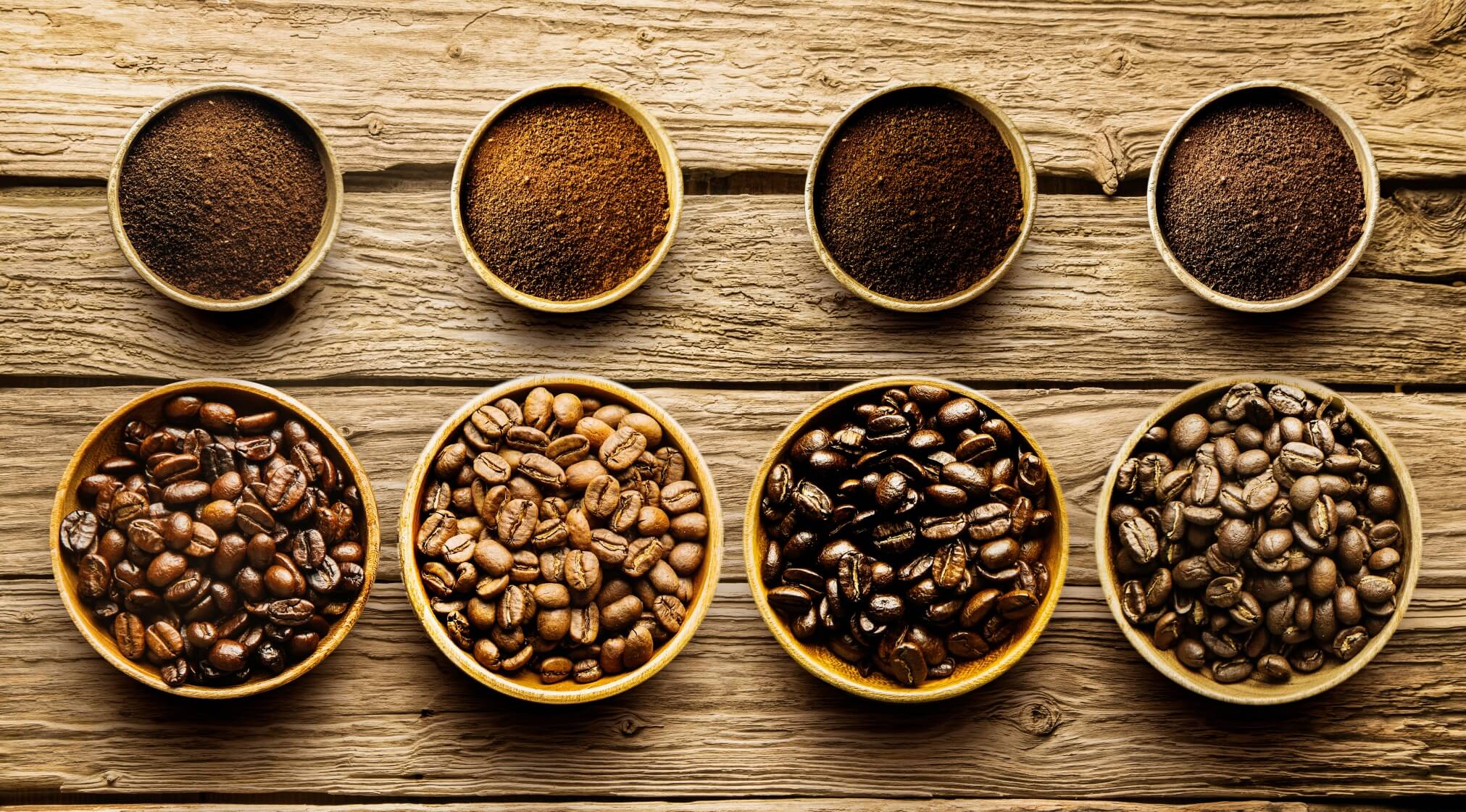
Coffee is thought to date back to around 800 A.D., when — so the story goes — 9th-century goat herders noticed their goats eating a plant and afterwards behaving as if they were dancing. Curious, the herder tried the plant himself and found it made him lively too.
Despite the name, coffee is a fruit. The “beans” grow on a bush and are found in the centre of a berry, known as a coffee cherry.
The plant
The coffee tree is an evergreen shrub in the Rubiaceae family. It grows in countries between the Tropics of Cancer and Capricorn, and once a tree is about three years old it starts producing coffee.
There are many species of coffee; the two that matter commercially are Arabica and Robusta.
- Arabica (Coffea arabica) accounts for roughly 75% of world production. It is self-pollinating, grows at higher altitudes and carries the acidity and aromatics most speciality coffee is built on.
- Robusta (Coffea canephora) is mostly grown in West Africa and Asia, especially Vietnam. It yields more than Arabica, contains more caffeine and tastes heavier and more bitter.
Both species can grow to 10 metres, but they are usually kept low so the cherries can be picked by hand.
From cherry to green bean
Coffee cherries are picked when they are fully ripe, then most often go through a process called de-pulping, which removes the thick skin of the fruit. The seed inside is covered in mucilage — a sticky, sweet substance — which is removed by washing, fermentation or drying.
The seed is then dried, either on raised beds or in mechanical dryers, to around 12% moisture. Green coffee is normally rested for a couple of months before it is shipped around the world to be roasted.
The varieties worth knowing
Typica is considered the original base for Arabica, and many other varieties descend from it. It grows to 3.5–4 metres, produces very little, and makes excellent coffee.
Bourbon originates from Réunion and produces slightly more than Typica. It is at its best between 1,000 and 2,000 metres.
Caturra is a mutation of Bourbon: a smaller tree that needs attention but gives higher yields and good cup quality, from 450 to 1,700 metres.
Catuai is a cross between Mundo Novo and Caturra. It is short and holds on to its fruit, which farmers in windy, wet places appreciate. It is widely planted in Brazil.
Mundo Novo was first discovered in Brazil in the 1940s. A natural hybrid of Typica and Bourbon, it yields around 30% more than Bourbon and resists disease well.
Heirloom is a catch-all for the ancient varieties — Ethiopia alone is believed to have thousands.
Maragogype is a mutation of Typica, discovered in Brazil, with very large beans and the nickname “elephant beans”.
There are many more. That is half the pleasure.